








You have no products in your cart. Please visit our product catalog to add some products to your cart.
Browse ProductsMedia Center
ETI Blog
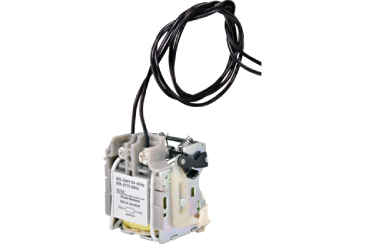
ETIBREAK NBS Upgrade: Adding a Shunt Trip Function
Adding a shunt trip to your ETIBREAK NBS moulded case circuit breakers (MCCBs) provides remote shutdown capability — crucial for improving safety and automation. This guide outlines the full installation process, from prep to testing. Whether you're upgrading an existing panel or setting up a new system, proper installation ensures reliable performance and seamless integration with your control setup. Let’s walk through each step to get it done right.
Switch to Sustainable
How the Shortage of Critical Raw Materials Affects Our Society
Imagine a world without nickel, copper, or silver. No electric vehicles. No smartphones. No renewable energy infrastructure. Without these essential raw materials, the development of modern technology and sustainable energy systems would come to a halt. These materials power our daily lives and industries—yet many of them are becoming harder to source, making the issue of critical raw materials one of the defining challenges of our time.
ETI Blog
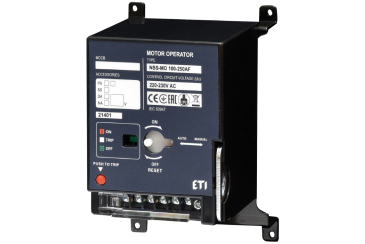
Installing Motor Operator on the ETIBREAK NBS MCCBs
In this blog, we’ll walk you through the installation and basic operation of the motor operator for ETIBREAK NBS moulded case circuit breakers (MCCBs). This accessory is designed to enhance control and convenience by enabling remote switching of the MCCB—both turning it ON and OFF—from a distance.
ETI Corporate News
ETI at the Intersolar fair 2025
ETI Blog
Why Doesn’t a DC System Require a Grounding System Similar to an AC System?
Grounding and earthing are crucial for ensuring the safety and stability of electrical systems. While both AC and DC systems may require grounding, the requirements and implementation differ significantly. This article explores why DC systems do not always need grounding like AC systems and how regulations, including IEC standards, influence grounding practices in DC applications.
ETI News
ETIPOWER EPL/EPH Air Circuit Breakers: Advanced Protection for Demanding Applications
ETIPOWER EPL and EPH series of Air Circuit Breakers (ACBs) — a versatile, high-performance solution designed to meet the needs of modern industrial facilities, data centers, and electrical equipment manufacturers.
ETI Blog
How to Install Internal Accessories on ETIBREAK NBS MCCBs
Installing internal accessories on a moulded case circuit breaker (MCCB) is a straightforward but essential process for enabling remote monitoring and improving system safety. In this blog, we’ll walk you through the step-by-step installation of two key accessories on the ETIBREAK NBS MCCB:
- Auxiliary Contact Block (PS) – for remote indication of the breaker’s ON or OFF position.
- Signaling Contact Block (Trip Indicator) – for detecting when the breaker has tripped due to a fault.
ETI Blog
Tripping Characteristics of NH Fuse-links – What Do gG, aM mean..
A fuse protects low-voltage electrical conductors and cables from short circuits and overloads. There are different types of fuses, such as type D, type DO, NV, cylindrical, etc. Various markings on a fuse or fuse link indicate important parameters, including the rated current In (e.g., 20A in Picture 1), rated voltage U (e.g., 500V), and short-circuit capacity (e.g., 120kA). This article focuses on the meaning of the gG marking, specifically the significance of the letter g (as opposed to a), which indicates the tripping or current-time (I-t) characteristic of the fuse.
Switch to Sustainable
Solving the Raw Materials Crisis: How Companies Can Ensure a Sustainable Future
The global shortage of raw materials is becoming an increasing challenge for industry and the economy. The transition to green energy and digitalization are significantly driving up demand for strategic raw materials, while some, such as rare earth elements, are already nearly depleted.
ETI Blog
IT Power Supply System in Relation to Grounding
An important element in protecting people (as well as property and animals) from the effects of electric current is the grounding of a part - the point of the electrical power supply system (e.g., a 20/0.4 kV transformer station that supplies a facility) and the grounding of exposed conductive parts. An exposed conductive part (such as the casing of an asynchronous motor) is normally not live; however, in the event of a fault, if a phase conductor comes into contact with the casing due to a failure, it can be dangerous to touch.
ETI Blog
Motor protection circuit breaker MPE25 - Understanding the Tripping Characteristics
Motor protection circuit breaker is a crucial component for protecting asynchronous motors from overloads and short circuits. To understand how the protection works, it's important to first understand the basic operation of an asynchronous motor.
Switch to Sustainable
Product Carbon Footprint
The Product Carbon Footprint (PCF) summarizes the total greenhouse gas emissions associated with a product throughout its lifecycle, from raw material extraction to production, usage, and disposal phases.